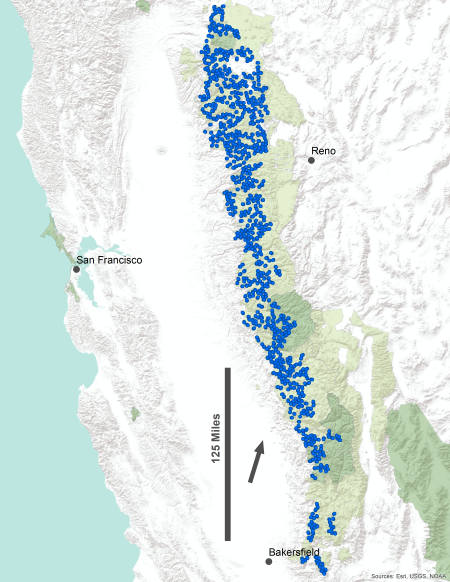
In 2016, I began developing and implementing a landscape-scale passive acoustic monitoring program in California’s northern Sierra Nevada in collaboration with my then-advisor and current collaborator, Dr. Zach Peery. The initial study encompassed 6,000 km2. In summer 2021, the project grew to encompass the entire Sierra Nevada forest ecosystem, including seven National Forests and three National Parks. With over 1,600 recorders spanning 25,000 km2, our survey area is the size of Vermont. In spring 2024, the monitoring effort grow again to include the four National Forests of Southern California.
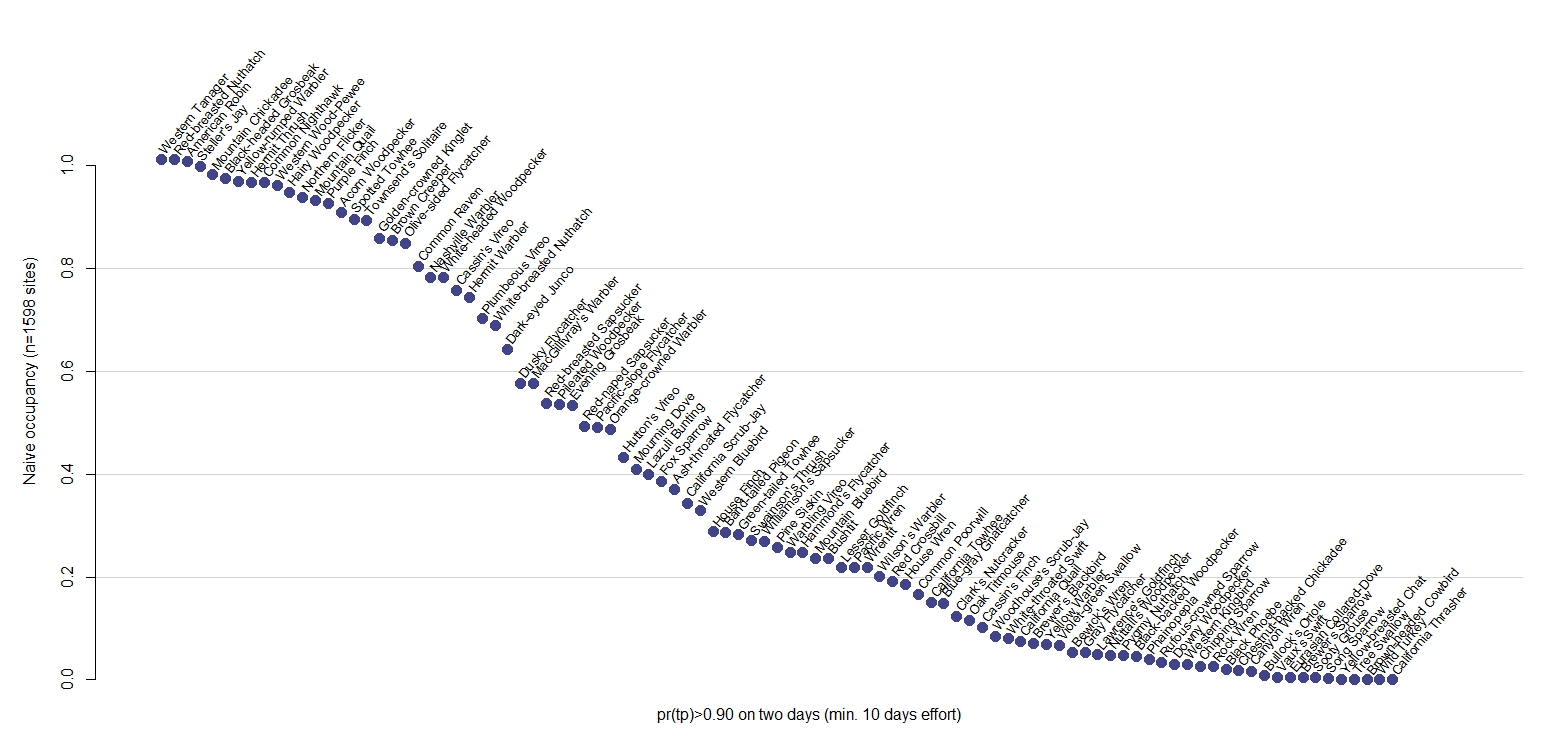
Spotted Owl conservation has been a core objective of this project since its inception. However, the BirdNET algorithm, a state-of-the-art machine learning algorithm developed by my colleague Dr. Stefan Kahl, enables us to generate population data on nearly the entire bird community – over 100 species.
Jump to: Sierra Nevada – Southern California – Representative Publications
Sierra Nevada

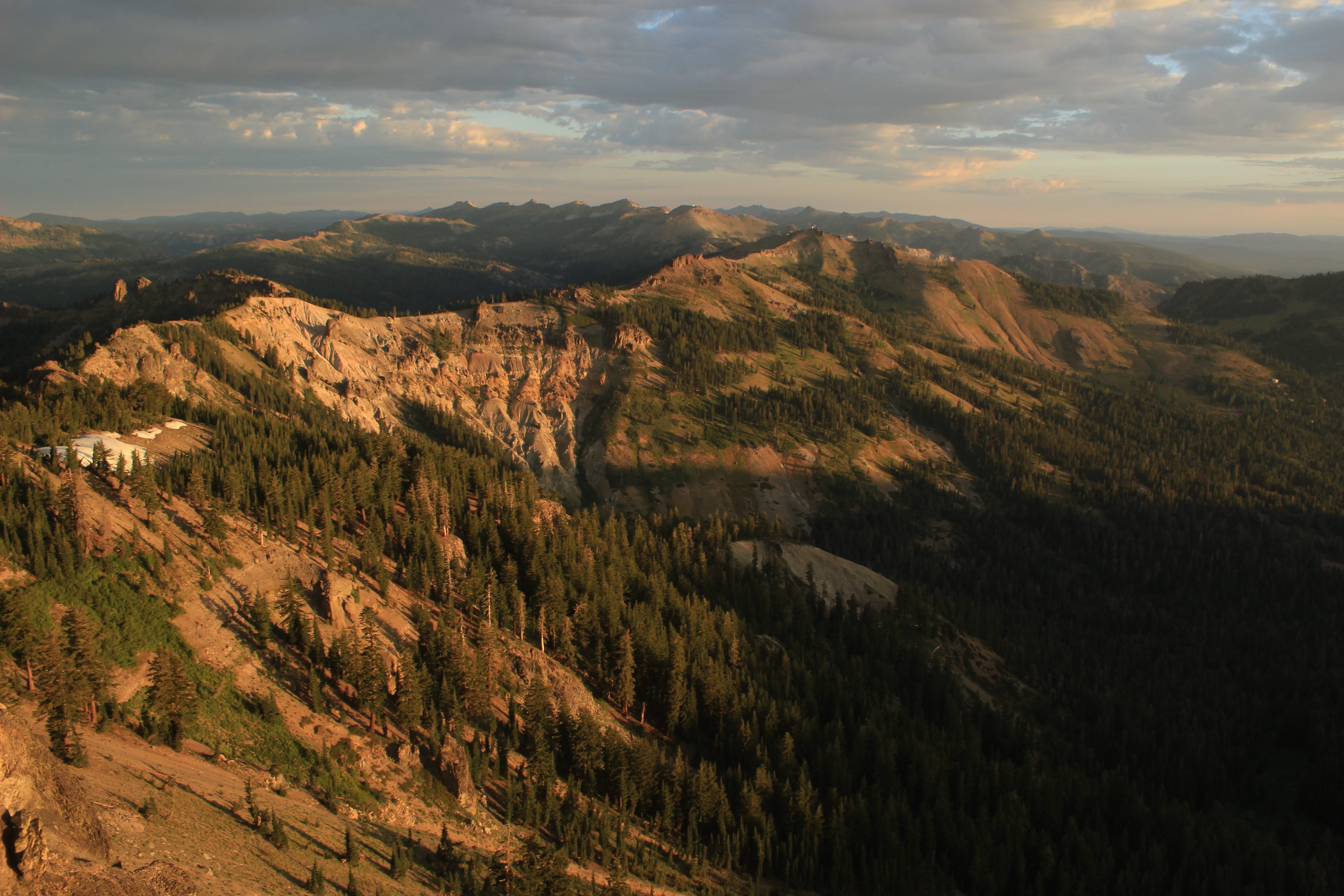
How do disturbances like fire, forest restoration and fuels management, and drought-induced tree mortality affect biodiversity? What environmental features (and at what spatial scales) determine the spatial structuring of biodiversity? What are the population trends of key focal species across their range? These questions are now within reach!
The Sierra Nevada monitoring effort began with an objective of understanding the ongoing Barred Owl invasion of this ecosystem (read more here). Our first population assessment indicated rapid population growth, which motivated a highly collaborative ecosystem-scale removal effort – which has so far proved to be a lasting success. In parallel, we have provided the first-ever Sierra-wide population estimate for the California Spotted Owl.
Beyond the two focal owl species, we have begun to explore the ecology of diurnal birds. Recent work includes: assessing how 67 species respond to the 2020 North Complex megafire, conducting the first study of Mountain Quail in over 30 years, and assessing the efficacy of forest management for the Olive-sided Flycatcher, which is declining precipitously in the Sierra Nevada.
Survey coverage in 2021
Southern California
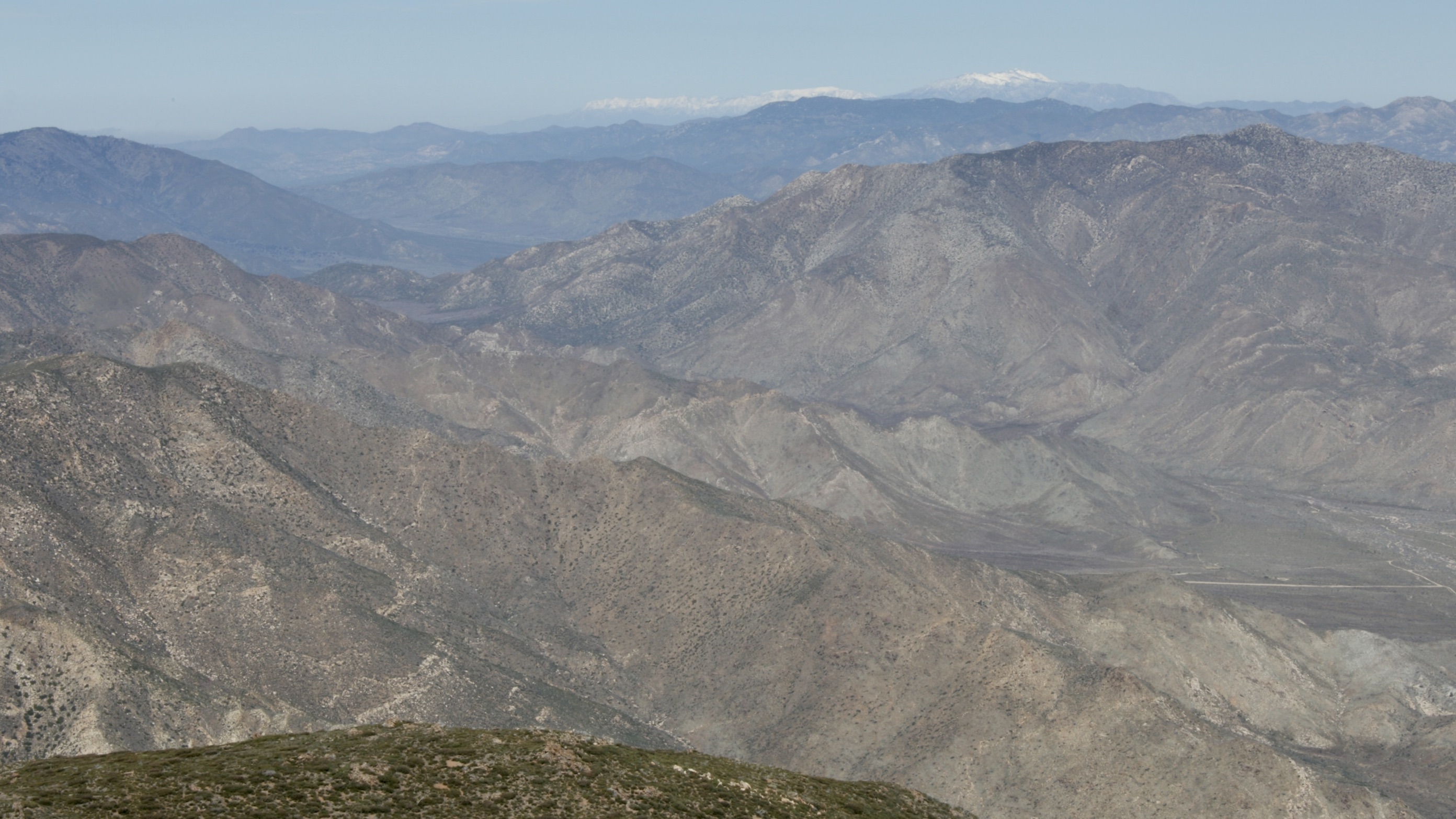
Biodiversity in the steep, arid mountains of Southern California is highly structured: there are distinct plant and animal communities in the upland forests and narrow riparian corridors. We are developing monitoring efforts in both ecotypes to support conservation efforts for a range of at-risk bird species.
In montane forests, understanding the distribution of the Spotted Owl is a top priority. The Southern California-Coastal population segment of the California Spotted Owl is likely to be listed as Endangered under the Endangered Species Act, based in part on findings that one of the presumed strongholds of this population has declined by over 50% over the last 30 years. Little is known about the owl outside of several long-term monitoring areas, which challenges both owl conservation and the implementation of urgently needed forest restoration to reduce the risk of large, severe fires.
Riparian areas in Southern California are under immense pressure from climate change (drought), fire, invasive species, and the needs of the massive population of greater Los Angeles. Point counts have been conducted sporadically throughout Southern California riparian areas, but there is no statistically powerful and easy-to-implement biodiversity survey protocol. We are meeting that need by developing a scalable passive acoustic survey protocol. At present, focal species include the Least Bell’s Vireo, Wrentit, and Bullock’s Oriel.
Representative Publications
- Gustafson, ML, K McGinn, JA Heys, SC Sawyer, and CM Wood. 2025. Rapid implementation and adaptive design of a large-scale monitoring program for a declining species. Biological Conservation 311: 111442.
- Brunk, KB, HA Kramer, S Kahl, MZ Peery, and CM Wood. 2025. Assessing spatial variability and efficacy of surrogate species at an ecosystem. Conservation Biology: e7058.
- Brunk, KB, C Maxwell, MZ Peery, GM Jones, L Gallagher, J Goldberg, HA Kramer, AL Westerling, JJ Keane, S Kahl, and CM Wood. 2025. Bioregional-scale acoustic monitoring can support fire-prone forest restoration planning. Frontiers in Ecology and the Environment: e2843.
- Hack, B, CA Cansler, MZ Peery, and CM Wood. 2024 Fine-scale forest structure, not management regime, drive occupancy of a declining songbird, the Olive-sided Flycatcher, in the core of its range. Ornithological Applications 126:1-9.
- Wood, CM1, VD Popescu1, H Klinck, JJ Keane, RJ Gutiérrez, SC Sawyer, and MZ Peery. 2019. Detecting small changes in populations at landscape scales: A bioacoustic site-occupancy framework. Ecological Indicators 98: 492-507. 1contributed equally
 Connor M. Wood